
What Should You Look for in a High-Quality Dental Zirconia Blank Supplier?
When choosing a supplier of dental zirconia blocks, the consistency and biocompatibility of the material should be evaluated first. According to the ISO 13356 standard, the fracture toughness of high-quality dental zirconia blank should exceed 5 MPa·m¹/², which can ensure that the prosthesis can withstand an average bite force of 300 Newtons in the oral environment. The service life can reach over 15 years. For instance, a study conducted by the Fraunhofer Institute in Germany in 2021 indicated that the failure rate of restorations made of high-purity zirconia materials was less than 2%, while low-quality materials could lead to over 10% early loss. Just as a certain European dental chain faced a compensation lawsuit of several million euros in 2020 for bulk purchasing of inferior blocks. The source of raw materials for suppliers is also of vital importance. The purity of yttria-stabilized zirconia should reach over 99.9%, and the impurity content should be controlled below 0.1% to prevent a recall incident like that of a certain Asian manufacturer in 2019 due to excessive heavy metals, which led to a 20% increase in customer churn rate.
The production capacity of a supplier directly affects the delivery efficiency. A reliable partner should have the capacity to produce over 100,000 zirconia blocks per month and ensure that the order cycle is completed within 7 days with an error rate of less than 1%. For instance, the Swiss company Ivoclar Vivadent reduced unit costs by 15% through automated production lines and increased production capacity to 12 million units per year. This helped dental clinics avoid a 30% risk of supply disruptions during the market shortage in 2022. The stability of the supply chain is also reflected in inventory management. The safety stock of suppliers should cover three months of demand, and the probability of transportation delay should be less than 5%. Just as during the COVID-19 pandemic, those suppliers that adopted real-time data monitoring increased customer satisfaction by 25 percentage points.
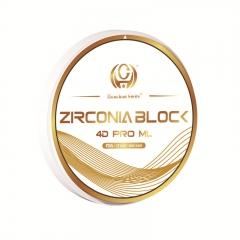 Technical support and innovation are another key dimension. High-quality suppliers usually offer CAD/ CAM-compatible zirconia blocks, with a sintering shrinkage rate controlled within 20%±0.5%, ensuring that the restoration accuracy is within 50 microns. According to a report in the 2023 Journal of Dental Materials, suppliers using nano-scale zirconia technology can increase the strength of restorations to 1400 MPa, which is 20% higher than that of traditional products. This is similar to Dentsply Sirona increasing its market share by 12% through R&D investment. In addition, suppliers should hold ISO 13485 medical device certification and provide free training services to reduce the error rate of dental technicians from 8% to 2%. Just as a certain North American clinic increased its work efficiency by 30% through the online platform of a cooperative supplier.
Cost and return on investment also need to be carefully balanced. The purchase price of high-quality zirconia blocks may be 20% higher than that of low-end products, but by reducing the number of reworks, the total cost of ownership can be reduced by 15%, and the return rate can reach 25% within a year. For instance, a consumer behavior survey shows that 80% of dental clinics prefer suppliers that offer bulk discounts, which can save 100,000 yuan in the annual budget, while the maintenance costs caused by inferior materials may account for 30% of the total expenditure. The payment terms of suppliers, such as a 90-day credit period or a 5% cash discount, can optimize cash flow. Just as in the economic fluctuations of 2022, flexible cooperation models helped small-scale clinics increase their survival rates by 18%.
Ultimately, when choosing a supplier, a comprehensive assessment should be made of its compliance and long-term cooperation potential. Global trends show that the digital dental market will grow at an average annual rate of 8% by 2025. Suppliers need to have CE and FDA certifications and shorten the product update cycle to six months. For instance, drawing on the successful case of Zirkonzahn, it has maintained a customer retention rate of over 95% through continuous innovation, while competitors lacking R&D investment have seen their market share decline by 15% over the past five years. By focusing on these multi-dimensional indicators, you can ensure the reliability of the zirconia block supply chain, thereby enhancing the competitiveness of your clinic and patient satisfaction.
Technical support and innovation are another key dimension. High-quality suppliers usually offer CAD/ CAM-compatible zirconia blocks, with a sintering shrinkage rate controlled within 20%±0.5%, ensuring that the restoration accuracy is within 50 microns. According to a report in the 2023 Journal of Dental Materials, suppliers using nano-scale zirconia technology can increase the strength of restorations to 1400 MPa, which is 20% higher than that of traditional products. This is similar to Dentsply Sirona increasing its market share by 12% through R&D investment. In addition, suppliers should hold ISO 13485 medical device certification and provide free training services to reduce the error rate of dental technicians from 8% to 2%. Just as a certain North American clinic increased its work efficiency by 30% through the online platform of a cooperative supplier.
Cost and return on investment also need to be carefully balanced. The purchase price of high-quality zirconia blocks may be 20% higher than that of low-end products, but by reducing the number of reworks, the total cost of ownership can be reduced by 15%, and the return rate can reach 25% within a year. For instance, a consumer behavior survey shows that 80% of dental clinics prefer suppliers that offer bulk discounts, which can save 100,000 yuan in the annual budget, while the maintenance costs caused by inferior materials may account for 30% of the total expenditure. The payment terms of suppliers, such as a 90-day credit period or a 5% cash discount, can optimize cash flow. Just as in the economic fluctuations of 2022, flexible cooperation models helped small-scale clinics increase their survival rates by 18%.
Ultimately, when choosing a supplier, a comprehensive assessment should be made of its compliance and long-term cooperation potential. Global trends show that the digital dental market will grow at an average annual rate of 8% by 2025. Suppliers need to have CE and FDA certifications and shorten the product update cycle to six months. For instance, drawing on the successful case of Zirkonzahn, it has maintained a customer retention rate of over 95% through continuous innovation, while competitors lacking R&D investment have seen their market share decline by 15% over the past five years. By focusing on these multi-dimensional indicators, you can ensure the reliability of the zirconia block supply chain, thereby enhancing the competitiveness of your clinic and patient satisfaction.
Technical support and innovation are another key dimension. High-quality suppliers usually offer CAD/ CAM-compatible zirconia blocks, with a sintering shrinkage rate controlled within 20%±0.5%, ensuring that the restoration accuracy is within 50 microns. According to a report in the 2023 Journal of Dental Materials, suppliers using nano-scale zirconia technology can increase the strength of restorations to 1400 MPa, which is 20% higher than that of traditional products. This is similar to Dentsply Sirona increasing its market share by 12% through R&D investment. In addition, suppliers should hold ISO 13485 medical device certification and provide free training services to reduce the error rate of dental technicians from 8% to 2%. Just as a certain North American clinic increased its work efficiency by 30% through the online platform of a cooperative supplier.
Cost and return on investment also need to be carefully balanced. The purchase price of high-quality zirconia blocks may be 20% higher than that of low-end products, but by reducing the number of reworks, the total cost of ownership can be reduced by 15%, and the return rate can reach 25% within a year. For instance, a consumer behavior survey shows that 80% of dental clinics prefer suppliers that offer bulk discounts, which can save 100,000 yuan in the annual budget, while the maintenance costs caused by inferior materials may account for 30% of the total expenditure. The payment terms of suppliers, such as a 90-day credit period or a 5% cash discount, can optimize cash flow. Just as in the economic fluctuations of 2022, flexible cooperation models helped small-scale clinics increase their survival rates by 18%.
Ultimately, when choosing a supplier, a comprehensive assessment should be made of its compliance and long-term cooperation potential. Global trends show that the digital dental market will grow at an average annual rate of 8% by 2025. Suppliers need to have CE and FDA certifications and shorten the product update cycle to six months. For instance, drawing on the successful case of Zirkonzahn, it has maintained a customer retention rate of over 95% through continuous innovation, while competitors lacking R&D investment have seen their market share decline by 15% over the past five years. By focusing on these multi-dimensional indicators, you can ensure the reliability of the zirconia block supply chain, thereby enhancing the competitiveness of your clinic and patient satisfaction.
Get the weekly Census Brief — verified figures, source pairs, and confidence scores, every Friday morning.
Get the Free Census Brief